

International Protection Standards —
Discipline & Judgment
Standards — Discipline & Judgment
Ⅰ. IBA
The Standards, Principles, and Discipline of International Protection
The path of protection is not a short sprint.
It is not a world completed by a single decision or a single training course.
In this field, people are judged not by words, but by attitude,
and not by intent, but by actions accumulated over time.
The protection and security industry in the Republic of Korea is a market in which approximately 6,000 licensed security companies are active.
The workforce numbers approximately 210,000 personnel, and the annual market size is estimated at roughly KRW 2.4 trillion to 3.5 trillion.
Competition is intense, but the structure is fragmented, and growth within national borders has clear limitations.
However, once those borders are crossed, the dimension of the market changes entirely.
The global private security market is valued at approximately USD 240 billion,
and when private military and security services are included, it expands into the hundreds of trillions of won.
This gap is not merely a difference in numbers,
but a difference in standards and perspective.
That is why standards matter.
What equipment one carries or what résumé one presents is not the essence.
What matters is where one sets their objective
and which standards one chooses to measure oneself against.
The moment one remains confined to domestic standards,
growth stops at that point.
The more extensive a person’s tactical experience,
the more time it often takes to fully understand the mechanisms of protection.
Protection is not about showcasing individual skill,
but a continuous series of judgments that read the flow of the team
and place collective safety first.
This sense is formed only through repeated training, patience,
and the process of lowering oneself.
The “Grey Man” spoken of by the IBA does not mean an invisible person.
It refers to the attitude of a protector
who does not provoke situations,
does not advertise their presence,
and knows how to conceal strength until the necessary moment.
A person who does not create risk,
but ends risk.
Invisible, yet always standing at the center.
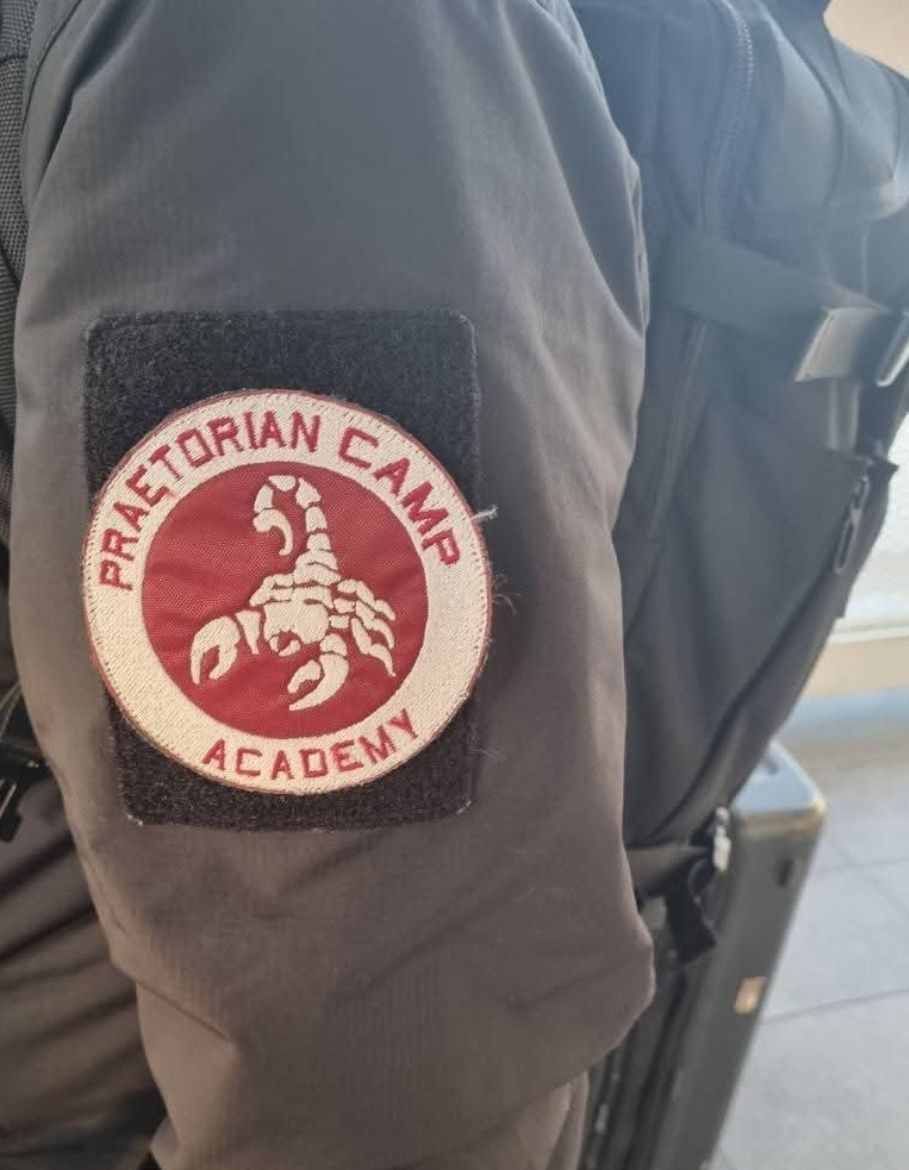
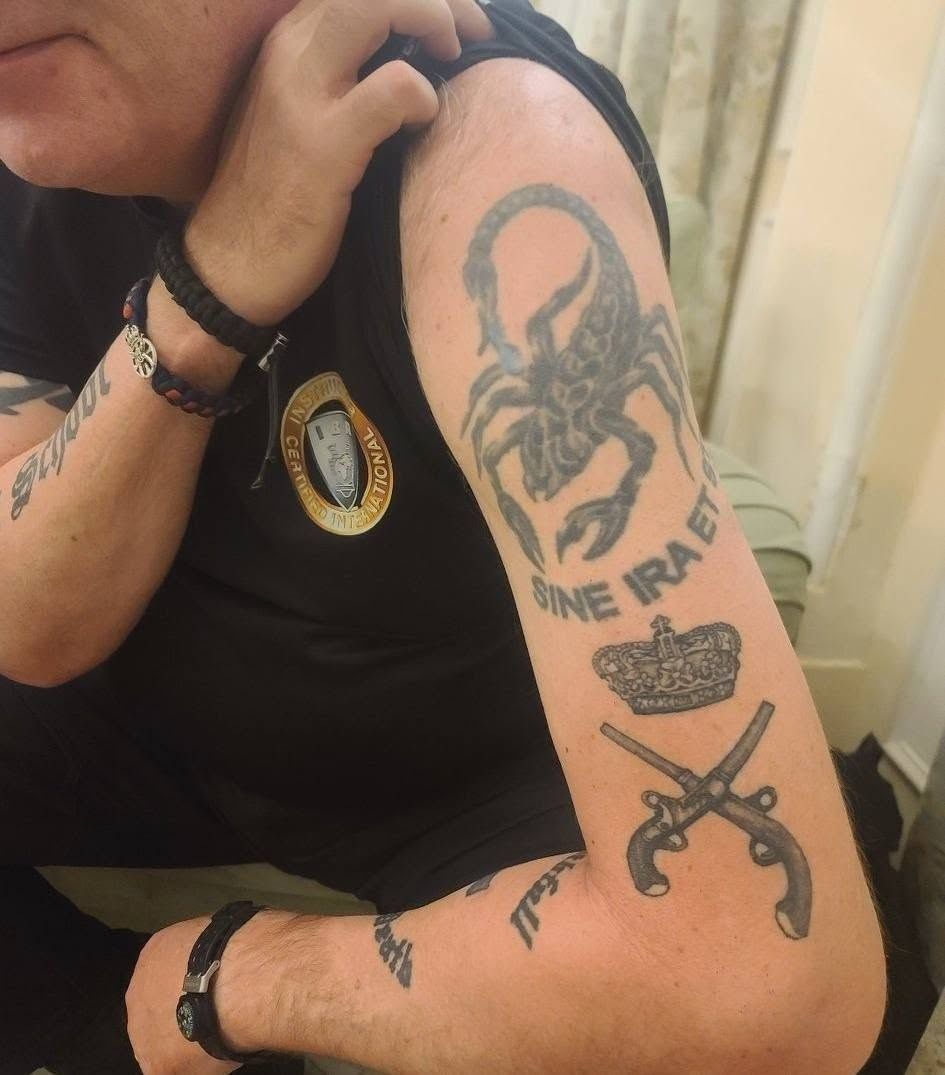
The scorpion, often mentioned as a symbol of the bodyguard,
illustrates this philosophy in the most intuitive way.
The scorpion has long embodied opposing meanings at once:
danger and protection, restraint and decisive action.
Venom is a symbol of fear,
but also a symbol of the one who understands and controls that fear.
According to interpretations shared in the field,
blue venom represents control and restraint.
The ability not to use force even when capable of doing so,
the attitude of locking emotion and action
to maintain the balance of the team.
Red venom represents decision in an unavoidable moment.
It is the responsibility to uphold the line until the very end,
and the obligation to act without hesitation and with precision
the instant that line is crossed.
This is not a matter of seniority or rank,
but of judgment and attitude.
This is also why scorpion tattoos are often placed on the left arm or the left chest.
The left side is closest to the heart
and is traditionally the side that bears the shield.
It symbolizes placing what must be protected at one’s core,
and taking responsibility to block and bear it with one’s own body.
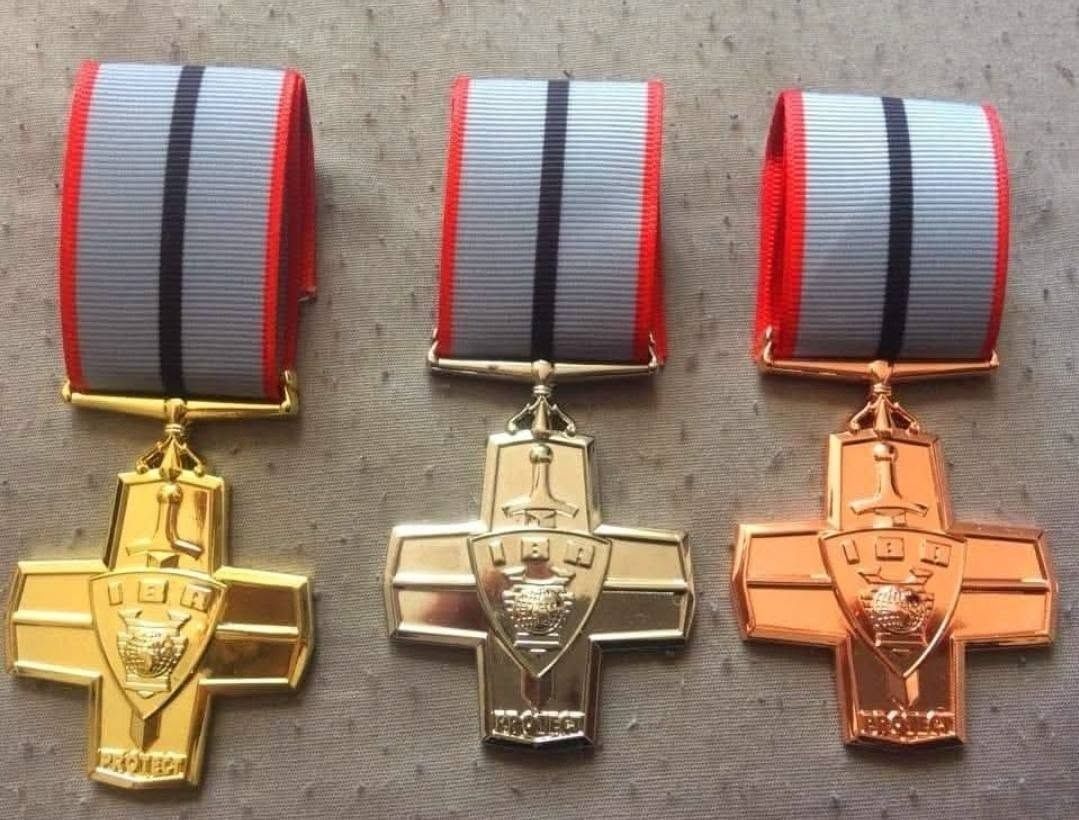
This symbolism continues in the IBA logo of the shield and the sword.
The shield represents restraint and protection,
the sword represents precise decision in an unavoidable moment.
Restraint in holding a sword without swinging it,
responsibility in holding a shield without hiding behind it.
That balance is the essence of protection.
Training is not an act for display.
Training is a habit for survival.
Operations are not built on luck.
They are the result of repeated standards and accumulated preparation.
The field is not kind.
That is why we become calm first, in training.
This journey does not end as a one-time event.
Only through continuous training, verification,
and an attitude of constant self-renewal
does a true career take shape.
The network formed through this process is not mere personal connections,
but an asset of trust between people whose standards and capabilities have been proven.
In particular, I extend deep gratitude
to the IBA Denmark Branch and the IBA HQ Praetorian Camp
for all the guidance and teaching throughout this journey.
This path is not easy.
But it is clear.
For those who walk it properly,
it is a path fully worth its price.




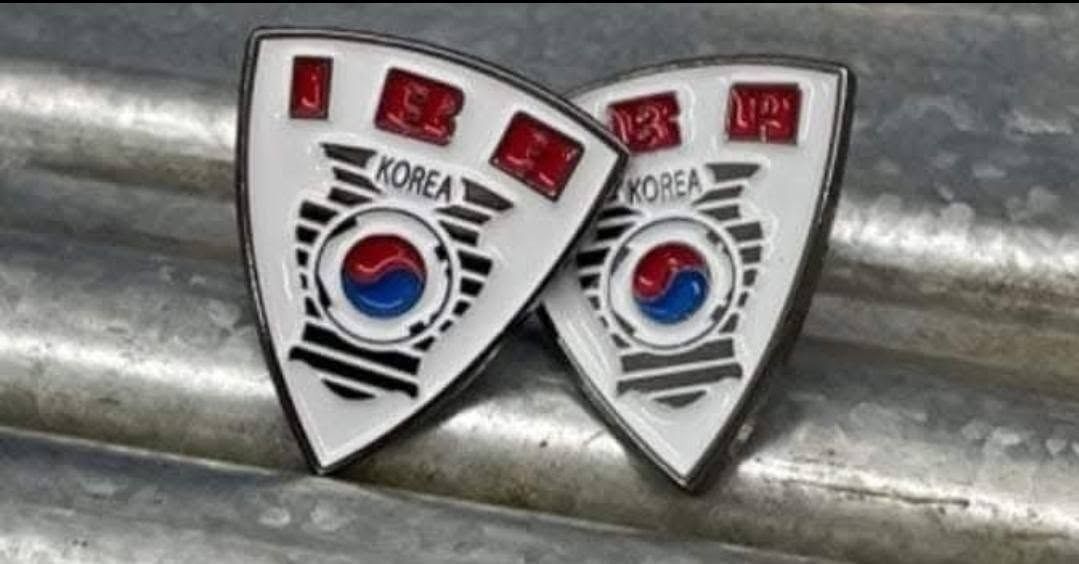
Ⅱ. ILETA
The Essence of Counter-Terrorism, Judgment, and the Order of the Wolf
The wolf is not merely a symbol of combat.
The reason counter-terrorism organizations choose the wolf as a symbol lies not in the ability to eliminate threats,
but in the attitude of managing them.
The essence of counter-terrorism is not destruction, but prevention;
not the expansion of chaos, but the restoration of order.
Wolves always move as a pack,
yet the pack is never noisy.
Each position is clearly defined,
and roles never overlap.
Someone observes,
someone interdicts,
and someone remains until the very end, bearing responsibility for the whole.
This structure is the foundation of counter-terrorism operations.
Within counter-terrorism organizations,
the most dangerous element is not the enemy, but misjudgment.
A wolf does not move hastily.
It observes long enough, waits long enough,
and moves with precision only at the necessary moment.
The accumulation of such judgment creates survival.
Training is not a time to list techniques.
Training is a process of accumulating judgment.
The core is learning, through the body,
not what to do,
but what must not be done.
The wolf does not create heroes.
It creates a pack.
It prioritizes the completeness of the team over individual bravery,
and chooses mission accomplishment above all else.
This philosophy is the reason counter-terrorism organizations exist.
That is why the wolf is not a symbol of aggression.